

Ultimate Wig Size Guide: How to Pick the Right Wig Size & Fit
Buying a wig online can feel surprisingly simple until you reach one little drop-down menu: Petite, Petite/Average, Average, Average/Large or Large.
Then the questions begin. What size is a 21½-inch head? Should you measure only around your head, or do ear-to-ear and front-to-back measurements matter too? What if one measurement says Petite while another says Average? Why can an Average wig from one brand feel comfortable while another Average wig feels tight?
The answer is that wig size is only one part of wig fit. Your head measurements matter, but so do your head shape, the amount of natural hair underneath the wig, the elasticity of the cap, adjustable tabs, cap construction and the particular manufacturer.
This guide brings together sizing and fit information from leading wig manufacturers including HairUWear, Jon Renau, Ellen Wille, René of Paris, Estetica Designs, Envy and TressAllure.
Quick Answer: How Do I Know What Wig Size I Need?
Use a soft fabric measuring tape and start by recording these three measurements:
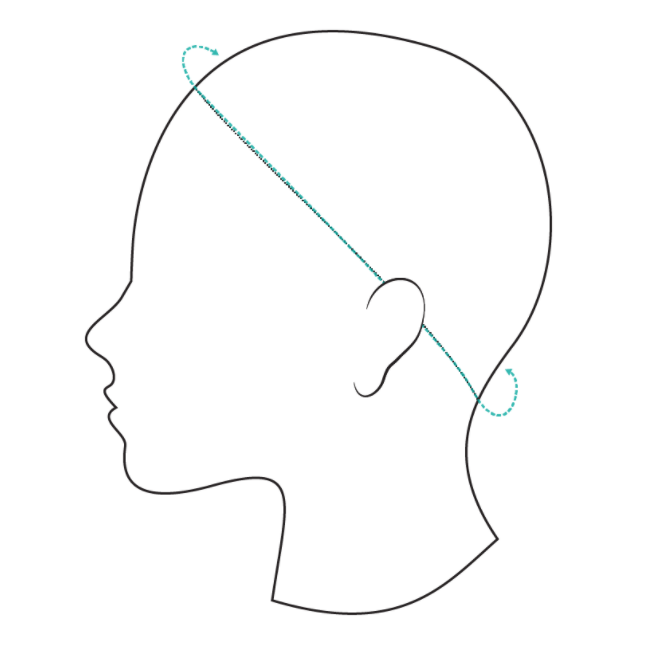
- Circumference: around your complete hairline.
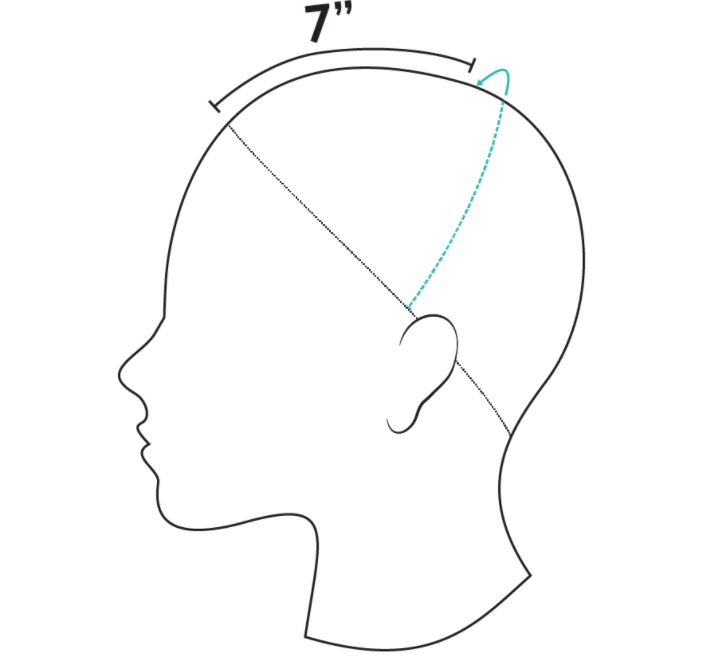
- Ear to ear: across the top of your head.
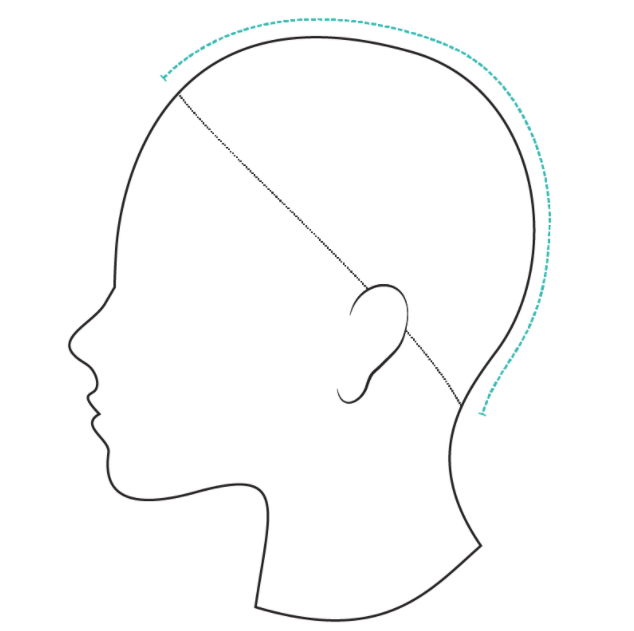
- Front to back: from your front hairline over the crown to the nape.
Circumference is the most common starting point. HairUWear, manufacturer of Raquel Welch and Gabor wigs, tells shoppers to determine cap size by measuring around the hairline.
Jon Renau and Ellen Wille go further and recommend using all three measurements. Both manufacturers state that if your three measurements fall into different size categories, you should use the size indicated by your largest measurement.
Important: there is no single sizing chart that guarantees the same fit across every wig brand and every cap construction.
- Wig size chart
- How to measure your head for a wig
- What if your measurements don't match?
- How sizing differs by wig brand
- Ellen Wille sizing explained
- How cap construction changes fit
- How a properly fitting wig should feel
- Common wig-fit problems
- Does natural hair affect wig size?
- Why the same wig looks different on different people
- Wig size vs. face shape
- What size should you order?
- Wig-size FAQs
Wig Size Chart: Petite, Average and Large Wigs
One of the clearest manufacturer sizing references comes from Jon Renau's cap-selection guide and its published measuring standards.
Use these measurements as a helpful reference point, rather than assuming that every manufacturer's wig will fit identically.
| Cap Size | Circumference | Ear to Ear | Front to Back |
|---|---|---|---|
| Child | 20" / 51 cm | 12" / 31 cm | 12" / 30.5 cm |
| Petite | 21" / 53.5 cm | 13" / 33 cm | 13.25" / 33.5 cm |
| Petite/Average | 21.25" / 54 cm | 13.25" / 33.5 cm | 13.75" / 35 cm |
| Average | 21.5" / 54.5 cm | 13.5" / 34 cm | 14.25" / 36 cm |
| Average/Large | 22.25" / 57 cm | 13.75" / 35 cm | 14.75" / 37.5 cm |
| Large | 23" / 58.5 cm | 14" / 35.5 cm | 15.5" / 39 cm |
Sizing reference: Jon Renau Measuring Standards. Individual wig styles and brands may fit differently.
How to Measure Your Head for a Wig
Before measuring, prepare your natural hair approximately the way you expect to wear it underneath your wig. Longer or thicker hair should be secured smoothly and close to the head rather than left in a bulky ponytail or bun.
Use a soft fabric measuring tape. The tape should sit snugly against your head without being pulled tight.
Video: How Do You Measure Your Head for a Wig?
Original supplier resource: HairUWear Wig FAQ | Original HairUWear YouTube video
Measurement #1: Circumference
Start at the center of your natural front hairline. Bring the tape around the side of your head, follow the hairline toward the nape, continue around the opposite side and return to your starting point.
Measurement #2: Ear to Ear
Jon Renau recommends first establishing the "top of head" point by measuring approximately 7 inches back from the front hairline. From the hairline at the top of one ear, measure across that top-of-head point to the hairline above the opposite ear.
Measurement #3: Front to Back
Place the measuring tape at your front hairline and run it in a straight line over the center of your head until it reaches the natural hairline at the nape.
Another Look at the Three Measurements: Ellen Wille
Ellen Wille uses the same three basic measurements and provides an especially helpful visual demonstration of where the tape should sit.


Images supplied by Ellen Wille. See Ellen Wille's complete sizing guide.
What If Your Three Wig Measurements Don't Match?
This is extremely common.
You might have a 21½-inch circumference that points toward Average, but a shorter front-to-back measurement that looks closer to Petite. Another person may have a smaller circumference but need extra depth from front to back.
Human heads aren't standardized. Some are longer and narrower. Others are wider through the temples. Some have more projection at the back of the head, while others are flatter.
Jon Renau and Ellen Wille both advise choosing the cap size indicated by your largest measurement.
Envy offers similar guidance for its Petite sizing: if your measurement falls between two sizes, the company recommends choosing the larger size and then using the wig's adjustable closures to fine-tune the fit.
Source: Envy — Petite, Please.
Ellen Wille Official Sizing Chart

How Wig Sizing Differs by Brand
This is one of the most important lessons in wig shopping: "Average" is a useful category, but it is not a guarantee that every Average wig will feel identical.
Stretch, cap depth, construction, ear-tab placement, nape design and the amount of natural hair underneath the wig can all affect the final fit.
| Brand | What to Know About Sizing & Fit |
|---|---|
| Raquel Welch & Gabor / HairUWear | HairUWear lists Petite, Petite Average, Average, Average Large and Large cap categories across its wig portfolio. The specific sizes available vary by style. HairUWear Wig FAQ → |
| Jon Renau | Jon Renau publishes detailed Child-through-Large measuring standards. Its guide also notes that some 100% hand-tied stretch constructions can fit from approximately Petite/Average through Average/Large. Jon Renau Cap Design & Sizing Guide → |
| Ellen Wille | Ellen Wille identifies Petite/Average as its standard size. The company says many Hand-Tied, Wefted and Enclosed-Wefted constructions offer enough stretch to accommodate larger measurements, while partially hand-tied designs generally provide less stretch. Ellen Wille Sizing Guide → |
| René of Paris / Noriko / Amore | René of Paris explains that its wigs include adjustable straps at the nape and that select Petite and Large caps are available. The company describes Amore as having a somewhat smaller, softer cap designed with wearers who have little or no biological hair in mind. René of Paris FAQ → |
| Estetica Designs | Estetica emphasizes that head measurements, facial proportions and individual features can change both how a wig sits and how the finished hairstyle looks on the wearer. Estetica: Same Style, Different Face → |
| Envy | Envy's Petite guide describes Petite as approximately 20¾–21 inches in circumference and Average as approximately 21½–21¾ inches. If you fall between sizes, Envy recommends choosing the larger size. Selected styles, including Charlotte, are also offered in Large. Envy Petite Sizing → Envy Charlotte Petite, Average & Large → |
| TressAllure | Check the individual wig's cap specification rather than assuming every style will fit identically. Once your cap size is established, TressAllure also suggests considering face shape, hair length, volume placement and texture when selecting the finished style. TressAllure Face Shape Guide → |
Envy Petite, Average & Large Sizing

A Real Example: One Wig Offered in Petite, Average and Large
Envy's Charlotte is a useful reminder that cap size and hairstyle don't have to be linked. The same basic look can be produced in multiple cap sizes so a wearer doesn't have to select a completely different hairstyle simply because she needs a smaller or larger cap.


Supplier photography: Envy. Read about Charlotte in Petite, Average and Large sizes.
A Special Note About Ellen Wille Wig Sizing
Ellen Wille deserves a separate explanation because shoppers often see Petite/Average in a product specification where they might have expected the word Average.
Ellen Wille identifies Petite/Average as its standard size. That does not automatically mean an Average wig wearer should rule the style out.
According to Ellen Wille, several of its cap constructions provide considerable stretch. The manufacturer specifically identifies Hand-Tied, Wefted and Enclosed-Wefted caps as constructions that can offer more flexibility, while partially hand-tied caps generally provide less stretching capacity.

Ellen Wille Wig Sizing Video
Manufacturer: Ellen Wille sizing guide | Original YouTube video
Additional Ellen Wille Measuring & Fit Video
View the original supplier video on YouTube.
Why Cap Construction Can Change How a Wig Fits
Imagine two pairs of pants marked with the same size. One is made from a flexible stretch fabric; the other is much more structured. Even though the label is identical, they may feel completely different when worn.
Wig caps work in much the same way.
Two wigs can both be described as Average while one conforms more easily to the shape of your head because of the material, wefting and stretch built into its cap.
Hand-Tied Caps
Jon Renau notes that its 100% hand-tied stretch section offers flexibility throughout the cap without losing its basic shape. In its cap-design guide, Jon Renau says this construction can accommodate a range from approximately Petite/Average through Average/Large.
Read Jon Renau's cap-design guide.
Open Caps, Monofilament Tops and Other Cap Designs
Envy provides a particularly useful look inside different wig constructions. Open caps use machine-sewn wefts that leave space for airflow, while monofilament sections use fine mesh and individually tied fibers to help simulate natural growth from the scalp.


Supplier cap-construction images: Envy. Read Envy's Anatomy of Wig Caps guide.
Wefted Backs and Wig Flexibility


Adjustable Nape Closures Matter Too
The nape is where many ready-to-wear wigs provide their final fit adjustment. Depending on the wig, you may encounter hook-style closures, Velcro-type adjusters or sliding mechanisms.


Envy SoSoft Cap Anatomy

Soft-Lined Caps
For wearers who prioritize softness against the scalp, lining materials can also influence comfort. Envy, for example, shows silk-chiffon-lined construction designed to provide a smoother surface against the head.

Adjustable Straps Fine-Tune Fit — They Don't Replace Correct Sizing
Most ready-to-wear wigs provide some way to make a modest adjustment at the nape. René of Paris explains that its wigs include adjustable straps that can be loosened or tightened to improve security and comfort.
If the built-in adjustment isn't sufficient, René of Paris recommends working with a wig retailer or professional for additional alteration.
Manufacturer references: René of Paris FAQ and How to Install a Wig.
Use the cap size to get into the right neighborhood. Use the adjustable tabs to fine-tune the fit.
How Should a Properly Fitting Wig Feel?
A well-fitting wig should feel secure and comfortably snug, not painfully tight.
- The front should sit naturally near your intended hairline.
- The ear tabs should sit at approximately the same height on both sides.
- The nape should sit securely instead of continually creeping upward.
- The wig shouldn't slide noticeably when you move your head normally.
- You shouldn't need to overtighten the adjusters simply to keep it in place.
- You shouldn't experience persistent forehead or temple pressure.
- You shouldn't finish the day with a headache from excessive cap tension.
A correctly fitted wig is something you should eventually be able to stop thinking about while you're wearing it.
Common Wig-Fit Problems and What They May Mean
| What You're Experiencing | What It May Mean |
|---|---|
| Pressure at the forehead or temples | The cap may be too small or the adjusters may be too tight. |
| Headache after several hours | There may be excessive cap tension. |
| The wig repeatedly rides upward at the back | The cap may be too small, too shallow front-to-back or mismatched to your head shape. |
| Lace front feels as though it is being pulled backward | The cap may be under excessive tension. |
| The wig slides when you move | The cap may be too large, insufficiently adjusted or need added grip. |
| Excess material bunches at the nape | The cap may be too deep front-to-back or too large overall. |
| Ear tabs don't sit evenly | Check wig placement first; head shape or cap dimensions may also be contributing. |
| The wig is only slightly loose | Try the built-in nape adjusters before changing cap sizes. |
Does Having Natural Hair Underneath a Wig Change the Fit?
It can.
Someone with thick natural hair secured underneath a wig has more volume inside the cap than someone wearing the same wig directly against the scalp.
That is one reason it's useful to measure your head in a way that reflects how you actually expect to wear your wig.
HairUWear advises people with longer hair to prepare it in a smooth pattern that lies close to the head before applying a wig.
If you normally wear a wig grip, liner or wig cap—or if the amount of natural hair beneath your wig changes substantially—recheck your fit rather than assuming an old size will always feel exactly the same.
Why Does the Same Wig Look Different on Different People?
Because cap fit is only part of the finished appearance.
Estetica Designs illustrates this particularly well in its Same Style, Different Face guide.
The manufacturer points to differences in head size, facial proportions, face length, face width and neck length as reasons the exact same wig can fall differently on different wearers.
Measuring Facial Proportions

Different Measurements, Same Wig


This is an important expectation when buying wigs online. A product photograph is an excellent style reference—but it cannot guarantee that the fringe, nape, crown or overall length will fall at precisely the same point on every wearer.
Wig Size and Face Shape Are Not the Same Thing
This distinction matters:
Face shape helps you choose a hairstyle.
Once you've identified an appropriate cap size, you can think about the silhouette you prefer around your face.
TressAllure's face-shape guide suggests several useful styling starting points:
- Oval faces: can typically experiment with a broad variety of lengths and silhouettes.
- Round faces: may prefer styles that create length, crown height or asymmetry.
- Square faces: may prefer softer waves, layers or side-swept elements.
- Heart-shaped faces: may prefer styles that add visual fullness closer to the jawline.
These are styling suggestions—not rules. Personal preference matters more than fitting yourself into a geometric category.
Source: TressAllure — How to Choose the Right Wig for Your Face Shape.
So, What Wig Size Should You Order?
Here is the simplest decision process.
- Prepare your hair as you intend to wear it. Smooth longer hair close to your head and account for any liner or grip you normally use.
- Measure circumference. This is the fastest and most commonly used starting point.
- Measure ear to ear. This gives you information about the width and shape of the cap you need.
- Measure front to back. This helps identify whether you may need more or less cap depth.
- Compare your measurements with the specific manufacturer's chart. Do not assume every brand defines size in exactly the same way.
- If your measurements disagree, follow that manufacturer's guidance. Jon Renau and Ellen Wille advise using the size associated with your largest measurement.
- If you're between sizes, pay attention to cap stretch. A flexible Petite/Average or Average/Large construction may fit better than jumping automatically to one extreme.
- Use the adjustable tabs for fine-tuning. They are designed for relatively small adjustments—not to turn a dramatically wrong cap size into the correct one.
ElegantWigs Fit Rule
Don't force yourself to tolerate an uncomfortable wig just because the label says it should be your size.
The best size is the one that fits your actual head securely and comfortably.
Frequently Asked Questions About Wig Sizes
What is the average wig size?
Using Jon Renau's published stock-system measurements as a useful reference, an Average cap is approximately 21½ inches in circumference, 13½ inches ear to ear and 14¼ inches front to back. Other manufacturers can use somewhat different sizing standards.
Is a 21-inch head Petite or Average?
Jon Renau lists a 21-inch circumference as Petite. Envy similarly describes its Petite range at approximately 20¾–21 inches. Always check the sizing information for the actual brand and style you're considering.
Is 21½ inches an Average wig size?
Yes. Jon Renau uses approximately 21½ inches for its Average circumference, and Envy also places 21½ inches within its Average sizing.
What does Petite/Average mean in wigs?
Petite/Average generally describes a cap between traditional Petite and Average sizing. Jon Renau's published reference uses approximately 21¼ inches in circumference for Petite/Average, while Ellen Wille identifies Petite/Average as its standard cap size.
What does Average/Large mean?
Average/Large provides more room than a standard Average cap without moving all the way to a traditional Large. Jon Renau's published reference lists approximately 22¼ inches circumference for Average/Large.
What if I'm between two wig sizes?
Follow the manufacturer's instructions. Jon Renau and Ellen Wille advise using the size indicated by your largest measurement when the three measurements don't align. Envy recommends choosing the larger size when between two of its sizes and using the adjustable closures to fine-tune the fit.
Should a new wig feel tight?
A new wig can feel securely snug, but it shouldn't cause ongoing pain, headaches or pronounced pressure. Persistent discomfort is a sign that the fit deserves another look.
Can I make an Average wig fit a Petite head?
Minor looseness can sometimes be corrected with the adjustable nape tabs. A significant size difference is generally better addressed by choosing a Petite or Petite/Average cap when one is available.
Can an Average wig fit a larger head?
Sometimes. Stretch varies substantially by cap construction. Ellen Wille says several of its flexible constructions can accommodate measurements approaching Average/Large, and Jon Renau also identifies significant flexibility in certain hand-tied constructions.
Why does my wig ride up in the back?
Possible causes include a cap that is too small, insufficient front-to-back depth, overtightened adjusters or a cap shape that doesn't conform well to the back of your head.
Why does my wig bunch at the nape?
Excess material at the nape can indicate that the cap is too large or too deep from front to back. This is one reason taking all three measurements can be more informative than relying only on circumference.
Does a lace-front wig fit differently?
"Lace front" describes the construction at the hairline rather than the overall wig size. However, the complete combination of lace, stretch materials, wefting, ear tabs, nape construction and hand-tied sections can affect how the finished wig conforms to your head.
Does my face shape determine my wig size?
No. Head measurements help determine cap size. Face shape can help you evaluate hairstyle and silhouette. They are two different considerations.
The ElegantWigs Takeaway
Finding the right wig size shouldn't require guessing whether you have a "small head" or a "large head."
Measure it.
Start with circumference, then record ear-to-ear and front-to-back measurements. Compare those numbers with the sizing information provided for the manufacturer and specific style you're considering.
Then remember something that a simple sizing chart cannot tell you: cap construction matters.
A flexible Petite/Average cap can sometimes fit more comfortably than a structured Average. A hand-tied or stretch construction may conform more easily to a particular head shape. Adjustable tabs may turn a slightly loose fit into an excellent one.
The goal isn't simply to buy the "correct number."
The goal is to find a wig that stays where you want it, feels comfortable for as long as you want to wear it and lets you stop thinking about the cap underneath your hair.
Beautiful hair should fit beautifully, too.
Available at ElegantWigs.com.
Manufacturer & Supplier Resources
Want to go deeper? The following manufacturer resources were used in preparing this guide. Each link opens the original supplier resource in a new browser tab.
- HairUWear / Raquel Welch / Gabor: Wig FAQs
- HairUWear Video: How to Measure Your Head
- Jon Renau: How to Select the Right Cap Design
- Jon Renau: How to Measure & Apply
- Ellen Wille: Unlock the Perfect Fit: Sizing Made Easy
- Ellen Wille Video: Wig Sizing / Measuring Video
- Ellen Wille Video: Additional Wig Fit Video
- René of Paris: FAQs
- René of Paris: How to Install a Wig
- Estetica Designs: Same Style, Different Face
- Envy: The Anatomy of Wig Caps
- Envy: Petite, Please
- Envy: Charlotte Now Available in Petite & Large Sizes
- TressAllure: How to Choose the Right Wig for Your Face Shape


